All
/
WINE
Ruth Spivey on English Wine and Wine Trends - ETO
19.06.26
•13 min read
Vous possédez un compte ?
Connectez-vous pour payer plus vite.
19.06.26
•13 min read
In 2020 Ruth Spivey went on a road trip around the UK, to see where English wine really landed. With English Wine Week officially starting tomorrow, ETO co-founder Dina Jahina caught up with Ruth, to discover how English wine has grown over the last 5 harvests…

So how did you first enter the world of wine?
Wine was just a hobby, and back then – we’re talking my early 20s – it didn’t cross my mind it would end up being my job. I didn’t come from a family who drank wine in any meaningful sense, and it didn’t register as a possible career path. I started going to tastings – often with my brother, who had got into wine through working in finance – and before long, my naturally nosy nature meant I started venturing into proper wine shops, instead of the supermarket. At the time, I was working internationally as a model, which also introduced me to a wealth of culture, food and good restaurants.
After a decade of modelling, I was keen to do something that genuinely interested me. Knowing I was allergic to offices and the 9-5, I was drawn to the glamourous world of fine dining. Ha! I realised pretty quickly that it wasn’t remotely glamourous, but persevered nonetheless. For a very brief moment I began training as a chef, but quickly pivoted back to front of house, then focused on wine. I have always loved hosting parties and dinners, and occasionally regret not working as a maître d’ for longer, as I really enjoyed that role, but here I am immersed in wine, so I can’t complain.
You work as a wine consultant, it sounds like a great job! What does that entail?
It can mean all sorts of things, depending on the person. I don’t much care for the title, but I can’t think of a better one. For me, it spans almost everything to do with wine, except the making of it.
I help bars, restaurants and hotels with their wine lists, whether that’s creating one from scratch, improving what’s already there, or increasing profitability. It could also be about improving the communication and presentation, re-organising stock management or devising staff training. I help brands and wine regions with marketing, PR and positioning, and create and produce wine events from the ground up for corporate and consumer clientele.
Then there’s advising private clients on wine shopping, cellar management and home wine service. From my desk I write for a variety of publications, and in my (non-existent!) spare time I’m working on a couple of book projects, and publish a wine column on Substack called The Wine Column No-one Asked For.

People can find the world of wine incredibly intimidating. Why do you think that is, and what’s your golden rule for stripping away the pretension?
It’s a complex subject, and unless you have some knowledge it can be hard to know if you’re making the right decision when wine shopping. Whilst the supermarkets have helped to make wine accessible and less exclusive, it doesn’t help having no-one on hand to advise. There’s simultaneously too much and not enough choice.
Also unhelpful are some of the new wine brands, that claim to ‘make wine simple’ by not including any meaningful information about what’s inside the bottle. Are they keeping wine simple, or keeping the customer in the dark? And then the aggressive e-commerce platforms offering ‘too good to be true’ deals, alongside some rather misleading ‘facts’ about their wines. In turn, they reach out to influencers to advertise on social media. How many of them have done thorough research about what they’re advertising? Perhaps they don’t understand it themselves (which begs the question, why are they pitching themselves as an expert?) or they simply don’t care, as long as someone sends them free wine. Are they looking after the customers, or looking after themselves?
Moreover, there’s still a misconception that good wine from specialist shops is too expensive for everyday drinking, which simply isn’t true. And the idea that wine and sommeliers are intimidating is completely unfounded today. It’s a hackneyed myth, peddled by certain people to justify their own existence. It’s a real shame.
The complexity is what makes wine fascinating, and so alluring – it’s a subject you can taste, and one that encompasses many other subjects within it. Geography, history, food, people, culture, chemistry, agriculture… wine has it all.
Golden rule? Trust people like me when we say it’s not intimidating, for a start! No-one cares if you don’t know how to pronounce something, or you’re wondering if that word on the label means a grape or a place. Drop your pride at the door – if your budget is low, just say so. Shops and sommeliers are far more interested in finding a wine you will like, than judging your budget. Not many of us earn a lot of money anyway – you might be surprised how low our budgets are, too!

Back in 2020, you went on an epic UK road trip, to discover if English wine was matching up against the press hype. Looking back across the last five harvests, what surprises you most about how fast our homegrown industry is maturing?
Growth and expansion are exciting, but there has been a lot in a short space of time. I’m pleased to see more still wines being produced, there’s only so much trad method sparkling anyone can drink (or afford to). A stable industry needs a balance of products to fall back on. It wouldn’t be good for UK wine to face huge overstock issues so soon. Other wine regions have taken decades to develop, so I would urge a slow and steady approach.
The English still wine scene is getting incredibly exciting. Can you walk us through the grapes and wines we should be paying attention to?
I think it’s more important to see what different people are doing with different grapes, as opposed to saying “this one is better than that one.” That said, I’m not keen on Bacchus, and a few years ago there was a push to make it the variety we were known for, but thankfully that idea has evaporated. Essex Chardonnay and Pinot receive a lot of press, in part because it allows people to make tenuous comparisons to Burgundy. There are a number of growers experimenting with varieties called PIWIs (a shortening of a German word) which are more disease resistant, and these plantings might prove to be significant as time goes on. We have fewer restrictions in the UK around winemaking – you can essentially grow and bottle whatever you like – which affords freedom and allows creativity to flourish.
Right: Ruth’s and dog in on the Cornwall leg of their road trip
English wine is often viewed as expensive. Why does a bottle of homegrown still wine command that price tag, and how does it stack up against global rivals at a similar price?
We’re an expensive country, in terms of land and labour. Compounded by the fact the majority of the industry is in the most expensive part of the expensive country! We’re also starting from scratch… it’s not a case of the fifth generation carrying on what their relatives established 150 years ago. When it comes to still wines, there’s no point pretending we can compete on price. At any level. If you want to spend £10 on a bottle, it won’t be a bottle of wine from England. And £20 gets you quite a lot of quality from France, Spain and Italy… it’s probably better to focus on our strengths instead!

For the complete beginner wanting to dip their toe into English still wine this week, what’s your ultimate ‘gateway’ bottle?
If you live near or near-ish a vineyard, why not pay them a visit? Do a tour and tasting. There’s always something special about tasting wine in the place in which it’s grown and/or made.
I’ve always loved Westwell’s wines – they’re great people, have a very cool winery, and a fairly even split between still and sparkling, plus they’re not greedy when it comes to pricing. More recently, I’ve discovered the brilliant family-run Oast Wood (from Tenterten in Kent) again focusing on still wines. Despite not liking Bacchus I do like their Luna’s Bacchus, mostly because it tastes more like a Riesling! Then Vyn Dene who are based in the Chilterns, they work with fruit from various regions and a highly respected winemaker. And I can’t not mention Dermot Sugrue, who’s been a singular figure in the growth and success of English wine for the last two decades, and is now fully focused on his own label Sugrue South Downs, which is taking the world by storm. He made his name via sparkling, but has now branched out into making some pretty serious still wines too.
Which English wine styles do you think are underrated? And if you were building the perfect English wine collection for summer, what would be on your list?
I am enjoying the light, youthful, chillable reds over the oak-aged ‘serious’ Pinots. I think English rosé in varying shades should get more attention. And there’s some nice field blends of red and white varieties together that do a similar job to a rosé, that can be really interesting. You obviously need a bit of everything, so I’d keep things simple and have an equal split of sparkling (trad method) rosé, light reds and quaffy crisp whites.
Left: Selfie whilst grape picking Mount Harry vineyard with Dermot Sugrue

We can’t talk about wine without talking about food here at ETO! What are your absolute favourite food pairings for English still wines?
This might sound patronising, but I take picnicking very seriously! Big salads, a cheese board, ham, pork pies, drumsticks, pate, coronation chicken, fresh baguettes. And fish and chips, of course. We’re not short of acid but that’s ideal for cutting through the salt and grease!
If you could pick just one perfect recipe and wine duo to celebrate English Wine Week, what are you cooking?
I’d make life simple and get a load of tinned British fish from Rockfish, and crack them open with fresh bread, lashings of butter, a crisp green salad and a bottle of something cold and fragrant. If someone could shuck some oysters too, that would be a bonus.
What changes do you see in wine hospitality in the UK, and around other major wine-growing countries?
It certainly feels as if everything is getting exponentially more expensive, and restaurants are having to work harder than ever to keep the price of wine in line with what people are prepared to spend. I’ve heard of some eye-watering figures for house wine these days, even up to the £50s for a bottle. It’s possible to combat this, though, with innovations such as wine on tap for wines by the glass, for example. The sommelier or wine consultant roles are often being cut to save money, and whilst I can understand this move, I think long-term it does more harm than good. A properly run and well-managed wine list is vital to maintain cost control. Not to mention ensuring the floor team are properly trained to sell the whole list successfully, and that wines at all price points deliver true value. A wine list is a lot more than a list of wines.
UK wine estate tourism has completely transformed. It's no longer a chilly trek through a field, but a world of stunning, design-led tasting rooms and luxury stays. Are there any standout vineyards you’d recommended as worth a visit/stay?
The UK offers all styles of wine tourism today. It’s been a few years since I was on the road, and lots of places have developed since then. That said, I recently visited Oast Wood in Tenterten, which has a wonderfully natural, low-key-yet-stylish feel. On the other end of the scale, you have Domaine Evremond, which has an incredibly smart and impressive set up. It’s worth checking out The UK Vineyard Guide – a new digital guide and app for English and Welsh vineyards, including info on tours and tastings – to find out more.
Wine Car Boot returns for its 13th year to King’s Cross' Canopy Market and Coal Drops Yard this July (23rd & 25th). For the uninitiated, how would you describe the vibe, and how did it all start?
It’s a farmers’ market, but for wine. Each stall is an independent wine shop, producer or adjacent business (like ETO) and you can sample wines with tokens, buy by the glass or bottle to drink in, and shop for bottles to take home. There’s food, music and a festival vibe.
I started it when I was working in an independent shop, and it was clear that no matter the style of the shop, people were reluctant to come in and remained stuck buying the same old industrial wines from the supermarket. I hoped that getting everyone together in a car boot style market might break some of the boundaries, and people would realise the best place to buy wine is their local shop, with advice on hand from people who know their stuff. Nearly all the wines at Car Boot are £10-£25 a bottle, and the ‘drink in by the glass’ price is at a retail margin. It’s really good value!

Can you give us a sneak peek at the independent English producers you’ve got lined up for the grids this year?
So far, we have Renegade, an east London urban winery, Oast Wood from Kent and Vyn Dene from the Chilterns. Plus Vine Street, who are a new English Wine Spritzer in both bottles and cans, all at a naturally lower abv. Keep an eye out on our website and social media over the coming weeks.
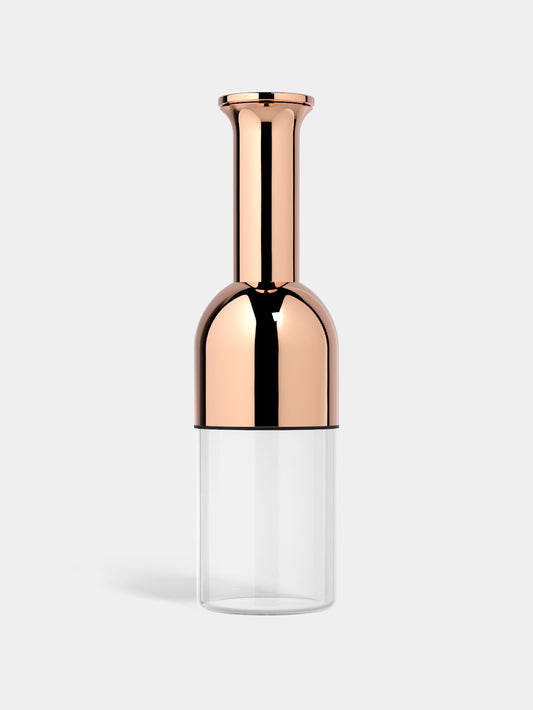
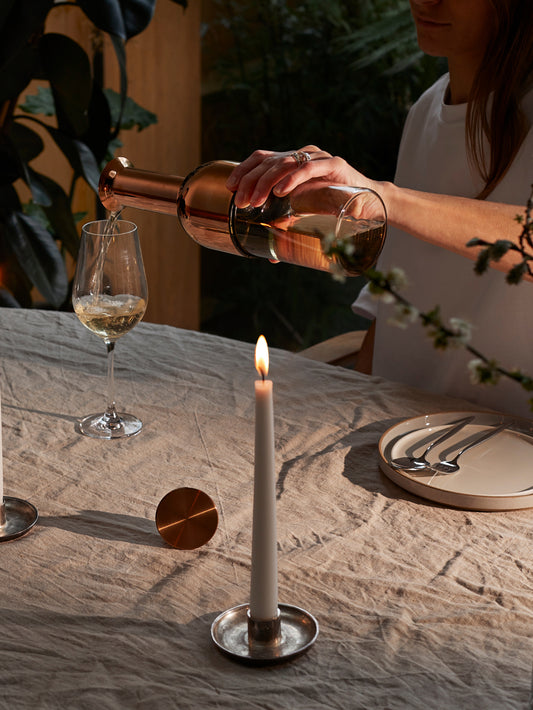
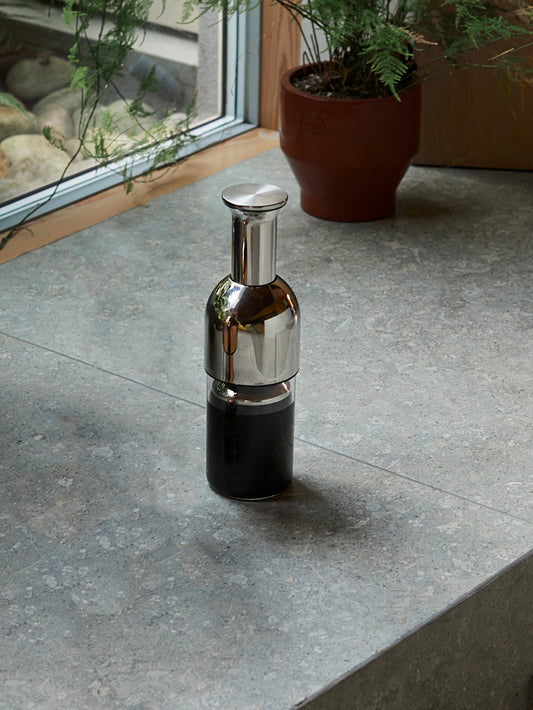
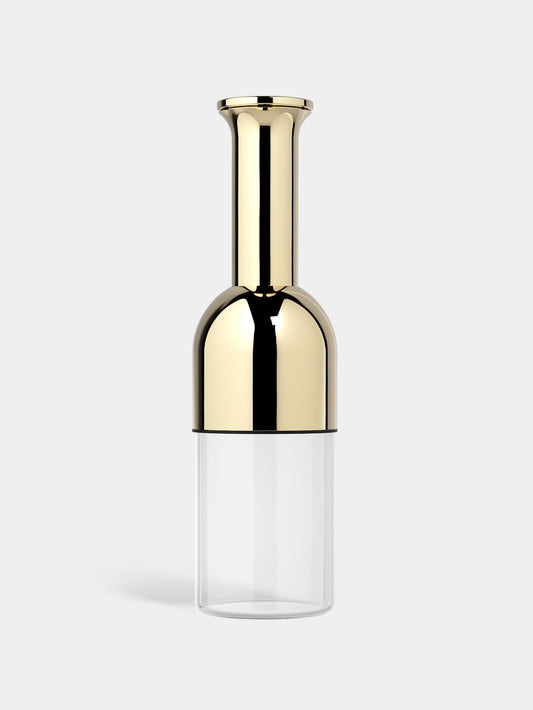
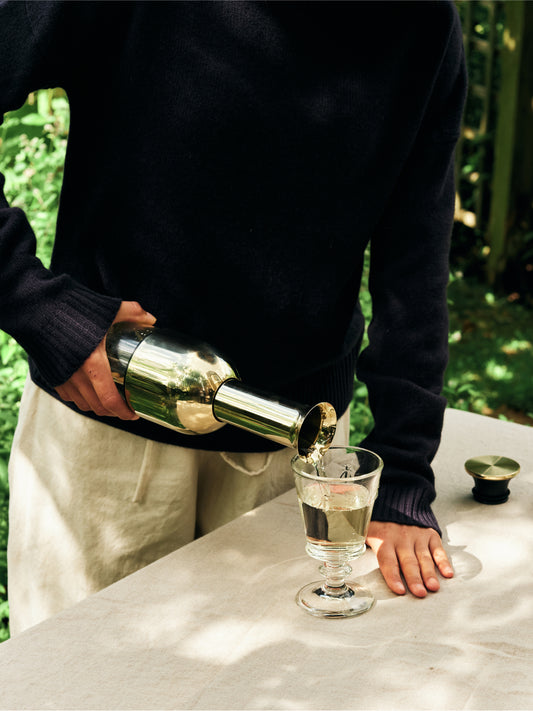
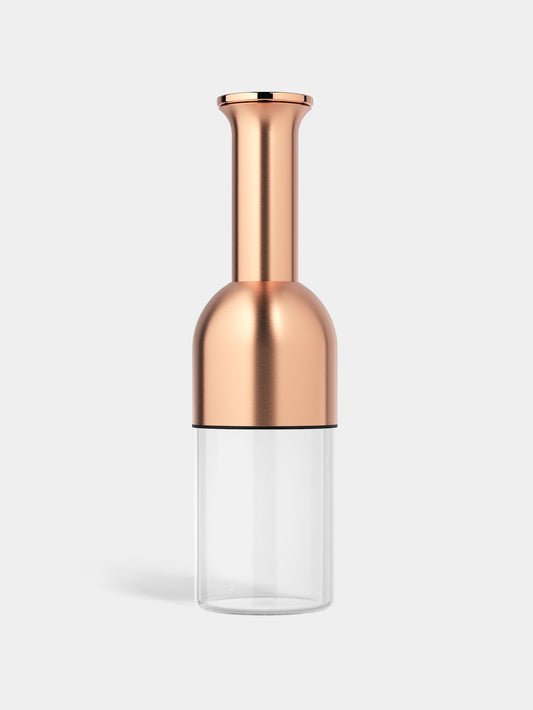
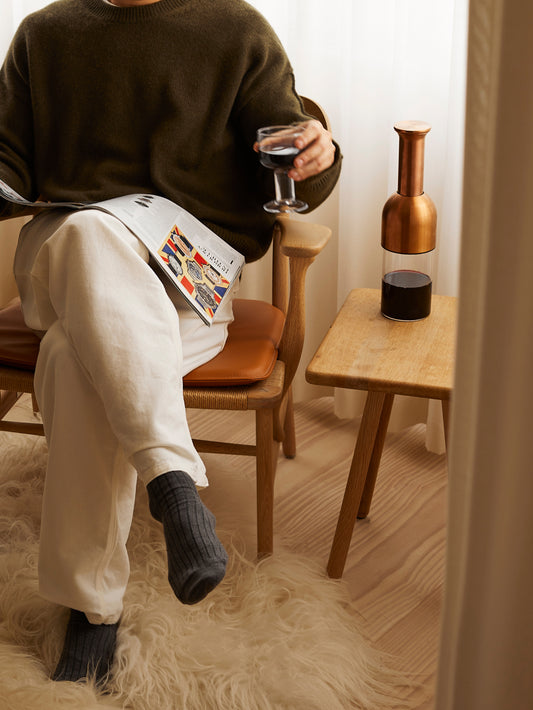
Which English wines have you decanted into your ETO?
Well, I plan to next week – I’ve still got some bottles that I collected during my road trip that need drinking, and I’m looking forward to seeing how they perform in my ETO over a couple of days.
Why do you decant your wine?
From a taste point of view, to give it some oxygen and open the aromas. People think you decant old wine, but it’s often better placed for younger, tighter wines. From an aesthetic point of view, I think it’s nice to have a decanter on the table. ETO in particular is such a beautiful piece of design and incredibly pleasurable to use. And lastly, from a control point of view. I sometimes decant half the bottle and hide the rest for the following day. Needless to say, this strategy isn’t always successful.
What's the biggest mistake people make when serving wine at home?
Red wine is often served too warm for my tastes. I’m also a dreadful glassware bore, and a lot of people have terrible glasses… and then they fill their terrible glasses with too much wine. However: your home, your rules. Most important of all though, if someone invites you into their home to share a bottle of wine, that is a wonderful thing, regardless of the temperature or glassware. So just enjoy the heartwarming experience of sharing wine with another person.

If you could give wine drinkers one piece of advice that would instantly improve their enjoyment of wine at home, what would it be?
Get your hands on four bottles you would like to drink. They may or may not have something in common, it doesn’t matter. Then open them all and drink them over the next few days. For me, it’s the best way to really experience wine, seeing how it develops over hours and days. You can make comparisons if you want, or go back and forth, depending on your fancy in the moment. It also makes you realise that opening a bottle of wine really isn’t a big deal. They are there to be drunk, and you don’t have to down the lot in one sitting.
Has the way you drink wine changed over the years, and if so, why?
Yes. Simply put, I drink better at every price point. In fact, one of the best things about knowing about wine is being able to seek out the bargains. If you have the money, buying nice wine is easy; the skill comes when you’re on a budget. The knowledge also brings added pleasure, as the stories, places and people take on deeper meaning. I have, however, retained the ability to simply enjoy wine. I don’t study every sip or agonise over tasting notes at home. I can switch off that part of my brain and drink like a normal person, thank goodness!
If we really want to discover what it’s like travelling around the UK, working in the vineyards and making wine we can with your new book. Tell us more.
In a nutshell, it’s a mid-life travel memoir through the lens of English wine and winemakers... during a pandemic. When I first set off, I was worried I wouldn’t find enough interesting things to write about, but as time went on it became clear that wasn’t going to be an issue. It was never meant to go on for two years, but I guess that’s what happens when you drive off and just let things unfold. I visited around 50 wineries, and unexpectedly found myself living and on one for several months. What it (intentionally) lacks in technical details about vintages and soil types, it will hopefully make up for in stories, people and plot twists.
Ruth Spivey, wine writer, ambassador, wine consultant and founder of Wine Car Boot whose goal is to ‘taste your way out of the supermarket’. You can also find her on Substack, where she publishes The Wine Column No-one Asked For.
Read more on English Wine Week:
How English winemakers are embracing their freedom by Abbie Moulton
A day at Artelium: Where art and food meets wine in the Sussex Downs