All
/
WINE
Beaujolais Nouveau
12.11.26
•8 min read
Vous possédez un compte ?
Connectez-vous pour payer plus vite.
12.11.26
•8 min read
Meet Chloe Faure. Originally from Bordeaux and the Dordogne, good food and fine wine were never far from her family table. Now based in the UK, she's spent the past decade working as a food and wine buyer and writer, with a particular interest in sustainability.
Chloe brings a spirit of thoughtful curiosity to the world of wine - a perfect fit for the ETO journal. First up, she takes a fresh look at the traditions surrounding Beaujolais Nouveau, and challenges a few of her own preconceptions along the way...

Coming from Bordeaux, I’ve never really taken Beaujolais Nouveau too seriously. Of course, the celebration holds a lot of meaning: the year’s harvest and all the hard work that goes into producing wine, not just in Beaujolais but across France and beyond. Yet there’s always been something slightly contradictory about celebrating the harvest by drinking the very first wine made from it. A little premature, perhaps, and somewhat unserious. At least, that’s what I thought when I lived in Bordeaux. Looking back, there may have been a touch of pretentiousness in my attitude.
But I discovered that this event has (and always had) so much more to it, by speaking to Julien Révillon, who oversees wine production at Maison Piron in Beaujolais. Located in the iconic Côte du Py, they produce some of the region’s most iconic crus, such as Morgon or Fleurie, as well as Fortnum & Mason's own Beaujolais range.
At first, Julien expressed some disappointment that the event has lost much of its popularity in France, in recent years. “The peak of Beaujolais Nouveau’s popularity was in the 2000s," he tells me. "Back then, ten times as much Beaujolais Nouveau was sold as today.”
When I asked what might explain this, his answer echoed my own thoughts, from the time I was living in Bordeaux:
“People are drinking less, of course, but there were also some excesses when it came to quality. People were disappointed by wines that simply didn't live up to expectations. But now, producers are putting quality ahead of quantity, and I don't hear anyone telling me that our Beaujolais Nouveau isn't good.”

This year, Julien is heading to the UK to celebrate the Beaujolais Nouveau, touring with his importer across Cornwall, London and Manchester. The enthusiasm with which Beaujolais Nouveau is celebrated here delights me. Wine bars go a step further, organising special evenings and inviting chefs to create events around the release. I can feel a genuine excitement about welcoming the new vintage, and perhaps that's one of Beaujolais Nouveau's greatest strengths: its ability to bring people together.
To a surprising degree, moving to the UK has reminded me of something: wine is a celebration. It’s something to share with friends and family, and to be enjoyed regardless of how much you know about what’s in your glass. And few wines embody that spirit quite like Beaujolais Nouveau.
"It's something quite unique in the world of wine," says Julien. "An event, on a specific date, all happening at once: it's the only global wine event that takes place on a single day. There's something quite magical about it. And the product itself is unique. It's an inimitable archetype."

Beaujolais Nouveau is the first wine of the season’s harvest, on a date fixed by tradition and regulation: the third Thursday of November, this year falling on November 19th, 2026. Made exclusively from Gamay, the region's signature grape, Beaujolais Nouveau is known for its fresh, juicy, fruit-forward character, achieved through semi carbonic maceration. In style, it shares some characteristics with Pinot Noir, its neighbour to the north in Burgundy.
It is precisely that freshness and fruitiness which makes Beaujolais Nouveau possible. Made from grapes harvested just weeks earlier, usually in August and September, it’s a wine made to be enjoyed young, without the ageing that many others require.
“The aim isn't to make great terroir-driven wines. When making Beaujolais Nouveau, it's about prioritising style. We're trying to capture the character of a festive wine: one that's all about fruit, pleasure, drinkability,” Julien says.
In recent years, Beaujolais Nouveau events have turned into a celebration of the region itself. “What's happening”, explains Julien, “is that, increasingly, people organising Beaujolais Nouveau events are also showcasing the other Beaujolais wines. The Beaujolais Nouveau celebration is becoming a celebration of Beaujolais as a whole. So, alongside the Nouveau, people are also drinking Beaujolais Blanc and the Beaujolais crus from the previous vintage, or even earlier ones.”
For Mathieu Lapierre, son of the late Marcel Lapierre, one of the pioneers of natural winemaking in the region, Beaujolais wine’s identity is rooted in the social history of Lyon. The vineyards developed in part to supply the nearby industrial city, where wine was an important part of everyday working life. As Mathieu puts it, “the region’s vineyards were shaped by the interests of Lyon’s bourgeoisie”. Unlike Burgundy, which became known for its prestigious appellations, Beaujolais built a reputation for more accessible, everyday wines: affordable, approachable and made to be shared.
It was, and in many ways, still is, a wine for everyone to enjoy. And that identity is central to understanding Beaujolais Nouveau. Its celebration goes beyond the first taste of the year’s new vintage. It's also a celebration of the people who made it, the work of the harvest and the pleasure of sharing it.

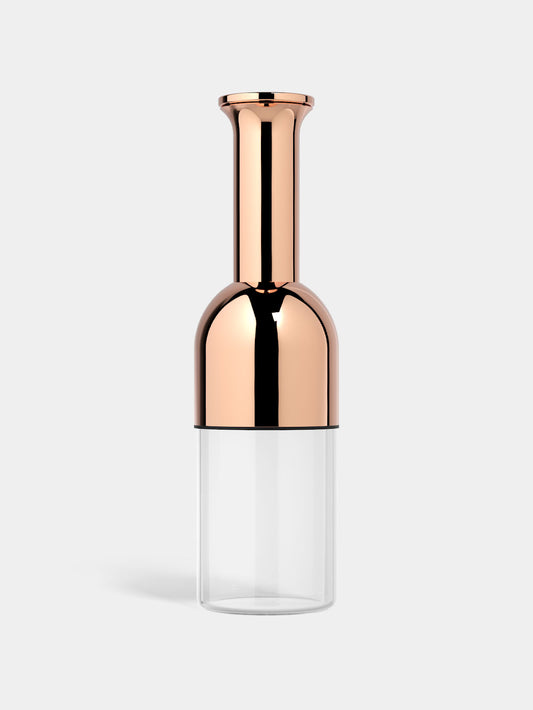
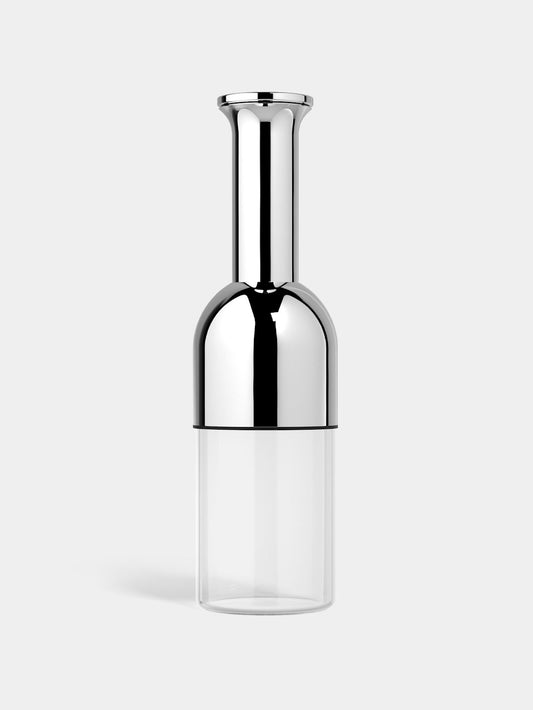
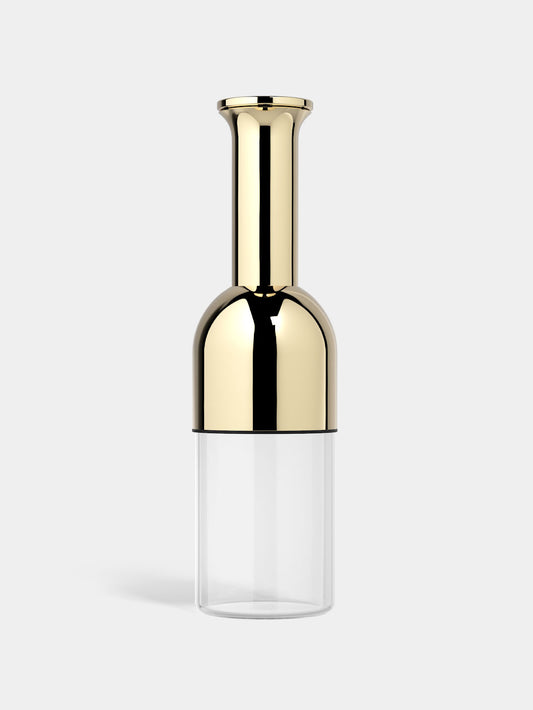
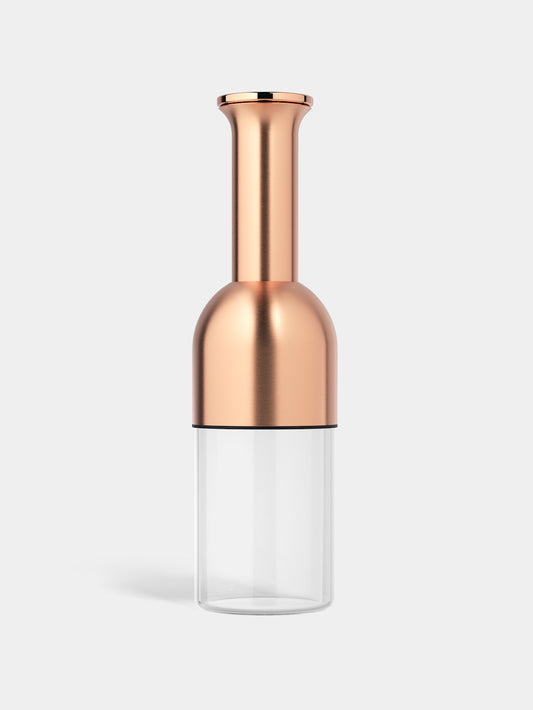
On my last birthday, my partner offered me a new decanter. As we were about to open a bottle of Beaujolais Nouveau, he suggested we pour it into the decanter. My Bordeaux pretentiousness, it seems, had still survived ten years in the UK, and my immediate reaction was to dismiss the idea. Decanters are for big, structured wines, I thought; the kind that need their tannins to soften, to leave space for their aromas. Surely a light, juicy Beaujolais had no need for one. Or did it?
My partner simply shrugged. He thought it looked nicer served in a decanter. And, in that moment, I realised how easily years in the wine industry had turned me into someone who could take the fun out of drinking wine. When I shared this anecdote to Julien, although he understood my initial thought, he rightly contradicted it. “I'm not at all opposed to the idea of decanting young wine," he says. "These wines often come from bottles that have only recently been filled. We know very well what happens: wines can go through a period of bottle shock. After bottling, the wine tightens up a little and loses some of its fruity aromas. This can last for two or three weeks. Using a decanter can really help aerate the wine again, bring out the fruit and allow it to express itself fully.”

Can’t wait for November 19th? Here’s 3 Beaujolais wines to try
Fortnum's Fleurie, Maison Piron, NV
The vibe: fresh, elegant, floral-forward.
A refined Beaujolais, from the iconic Fleurie cru, one of the ten iconic crus of the Beaujolais region. Here, you can expect Fleurie’s exceptional soils and the winemaker’s gentle extraction to bring the classic red berries and slightly floral profile that makes this cru a wine lover’s favourite, delivering an ever-delicate and elegant wine.
Raisins Gaulois, Maison Lapierre, 2024
The vibe: fun, fruit-forward, natural.
This is the closest you will get to a Beaujolais Nouveau feel. Crafted using young wines, this brings bright strawberry punnet flavours, with a lively palate which makes for a great and playful aperitif, perhaps best enjoyed slightly chilled!
Morgon, Sebastien Besson, Domaine du Penlois, 2022
The vibe: bolder, darker fruits, very food-friendly.
Our second Beaujolais cru in this selection, but this one offers a more lively approach to the traditional Morgon wines you may have tried in the past. Sebastien Besson crafts his own cuvéee on the family estate rooted in carbonic maceration and organic farming, bringing a classic Morgon with a modern edge.
Beaujolais wines are so bright and expressive that they will often be enjoyed perfectly well on their own. But if you're looking to serve them with food, lighter dishes and tomato-based recipes make for great company.
To start with:
As ever, what grows together, goes together. The Beaujolais region has an array of charcuterie to enjoy, which makes a great fit with the wine. A platter featuring a few saucisson, terrines, and paté en croute’s ancestor: the iconic brioche saucisson.
Next, a lighter, tomato-based main:
We’re going on the other side of the border for this one, to Italy, and making an authentic Penne all’Arrabbiata. Tomato-dishes are often the hardest to pair with wine (and don’t get me started with spicy dishes) but that’s exactly where Beaujolais shines. I personally love letting the most simple Italian dishes bubble away for a few hours to let the flavours speak. Coming from a Basque family, I also suggest using Espelette pepper flakes, for a slightly milder and smokier sauce.
Dessert has to be cheese:
To finish this meal, what’s better than the most pudding-like of all cheeses? St Marcellin, served on a crusty walnut sourdough, topped with a bit of honey. And here’s a little secret that French people keep to themselves: take your St Marcellin out of the fridge when you start eating your starter, for the perfect level of creaminess.
Connectez-vous ou créez un compte pour utiliser vos points.