All
/
WINE
A Wine Maker’s Guide to the Cape Winelands, South Africa: Wine, Design & Innovation
10.04.26
•6 min read
10.04.26
•6 min read
When Dina Jahina, ETO co-founder, met the Babylonstoren team and then had the opportunity to reach out to Klaas Stoffberg, cellar master at Babylonstoren, it sparked a conversation founded on mutual admiration and a shared spirit of discovery.
Set in the Cape Winelands, close to Franschhoek and Stellenbosch, Babylonstoren is far more than a farm and hotel. It’s a “paradise anchored to the land,” where every aspect of the experience - from farm-to-fork food, to the well-being sanctuary of the spa - are led by the diverse botanical tapestry of their stunning garden.
A word of warning, before we begin: further reading may inspire you to book an immediate holiday to the winelands of South Africa...
Dina: South Africa is on my bucket list (and Babylonstoren is at the very top!) For anyone visiting for the first time, what are the sights, experiences and tastes not to be missed?
Klaas: South Africa is wonderfully diverse. You can move from dramatic coastlines and national parks to vibrant cities and world-class restaurants, within a single day. The Cape Winelands, in particular, are unmissable – rolling vineyards framed by majestic mountains, historic Cape Dutch architecture and an extraordinary food culture rooted in the land.
Visitors should taste the country’s remarkable wines, enjoy seasonal produce at its freshest, experience a traditional braai, and embrace the warm, generous hospitality that defines South Africa.

Dina: What would you say makes South Africa stand out in the world of wine?
Klaas: South Africa benefits from remarkable natural diversity – altitude, ocean influence, complex soils and abundant sunshine. But beyond climate, it is the combination of heritage and innovation that elevates its wines. World-class wine is ultimately about authenticity. Our wines tell the story of Simonsberg Mountain – structured yet refined, expressive yet restrained. Babylonstoren lies at the foothills of Simonsberg Mountain in the Boland region of the Cape Winelands, close to Stellenbosch and Franschhoek. This unique terroir – combining mountain slopes, altitude, varied soils and a Mediterranean climate – allows for elegance, balance and natural freshness in the wines.
Our highest vineyards, including Pinot Noir, lie approximately 620 metres above sea level. Some vines were planted by the Louw family, who farmed here for four generations and supplied fruit to the Simondium Co-operative Winery.
Dina: Babylonstoren has been on an epic journey. Tell us more about the history of the land.
Klaas: The farm was established in 1692. When the current owners arrived in 2007, they recognised the historical value of what remained, while also wanting to create something meaningful for the future.
At the heart of this vision lies the five-hectare garden, inspired by the historic Company’s Garden in Cape Town, where Dutch East India Company ships once replenished with fresh produce. The garden remains the beating heart of the farm today.
Existing orchards and vineyards were preserved, while olives, almonds, prickly pears, dragon fruit and tea were added. Over time, Babylonstoren grew organically – a wine cellar, restaurants, hotel, farm shop, and olive oil plant followed.
Yet despite its growth, the philosophy has remained consistent: an unhurried working farm lifestyle, rooted in quality and craftsmanship. There is an element of discovery at Babylonstoren – something new, each time guests return. It evokes the inner child.
A subterranean wine tunnel was added, offering guests a journey through centuries of wine-making and storage, culminating in a tasting around a large wooden table underground. The interactive wine museum, The Story of Wine, opened its doors – showcasing wine’s cultural history through antique corkscrews, terroir exhibits and immersive sensory displays.

Dina: You recently celebrated the end of harvest. What will you, the winemaker, be looking for and want to create with the 2026 harvest? And, is there a shared philosophy that runs through farming and vineyards in South Africa?
Klaas: Wine begins in the soil. Our philosophy is symbolised in our logo – the pipe (the farmer), the flower (the garden) and the bird (nature). It reflects a deep respect for the land and a belief in working in harmony with nature.
Harvest is a time of energy and precision. Early mornings in the vineyard. Careful tasting of berries to assess ripeness, acidity and phenolic maturity. The cellar hums as fruit arrives in small batches.
For the 2026 vintage, the goal remains: elegance, freshness and wines that speak honestly of the region.

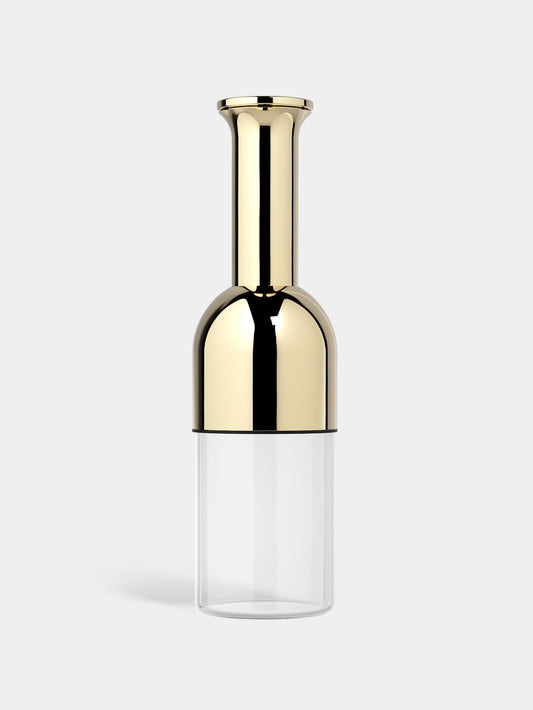
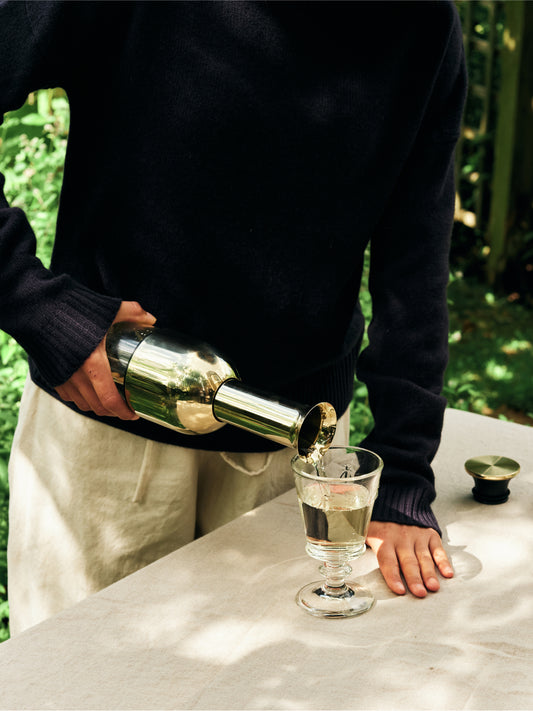
Dina: At ETO we celebrate the enjoyment of wine. The ETO wine decanter gives you the freedom to open the wine you want when you want. Could you share a couple of favourite wines and what you pair them with?
Klaas: We produce 14 grape varieties, crafting ten wines in our standard portfolio – four whites, a Provençal-style rosé and four reds.
Babylonstoren Babel is a bold yet elegant red blend of eleven cultivars. Black fruit, graphite and cigar box complexity. Excellent with slow-cooked game, oxtail stew, fire-grilled lamb chops or boerewors.
Nebukadnesar is our flagship Bordeaux-style blend of Cabernet Sauvignon, Merlot, Cabernet Franc, Petit Verdot and Malbec. Full-bodied and refined, with notes of violets, thyme, blackcurrant and tobacco, supported by a warm spice and elegant tannin structure. Best enjoyed with slow-roasted lamb, beef short ribs or a rich oxtail stew.

Dina: When you’re making a wine, do you ever design it with decanting in mind?"
Klaas: Yes, we as a winemaking team often do consider decanting when designing a wine, especially for styles meant to age or develop over time. For example, when crafting bold reds like Cabernet Sauvignon or a Bordeaux blend, a winemaker may intentionally build in firm tannins and concentrated structure, knowing the wine will benefit from oxygen exposure—either through decanting or ageing.
Decanting wine is important because it allows the liquid to interact with oxygen, which enhances its aromas and flavours. When wine is exposed to air, it “opens up,” making it more expressive and enjoyable to drink. This is especially beneficial for bold red wines like the Nebukadnesar Bordeaux blend and the Cabernet Sauvignon, which can taste tight or harsh when first opened. Decanting also helps to soften tannins, improving the overall mouthfeel and balance of the wine. Another key reason to decant is to separate the wine from sediment that forms as it ages. By carefully pouring the wine into a decanter, you leave the unwanted particles behind in the bottle. Decanting can also enhance the visual appeal of the wine, making the experience feel more refined and intentional. In addition, it allows you to fully appreciate the complexity and structure of higher-quality wines. Even some white wines like Chardonnay can benefit from brief decanting, especially if they are aged. Overall, decanting is a simple step that can significantly elevate the taste, clarity, and enjoyment of wine.
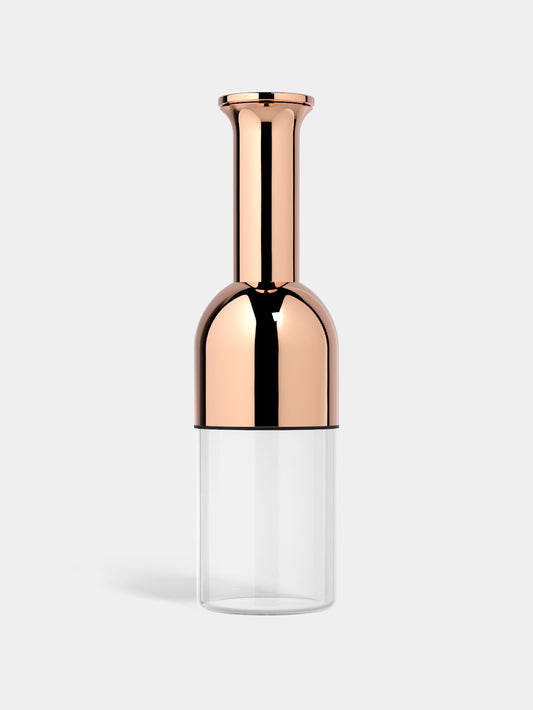
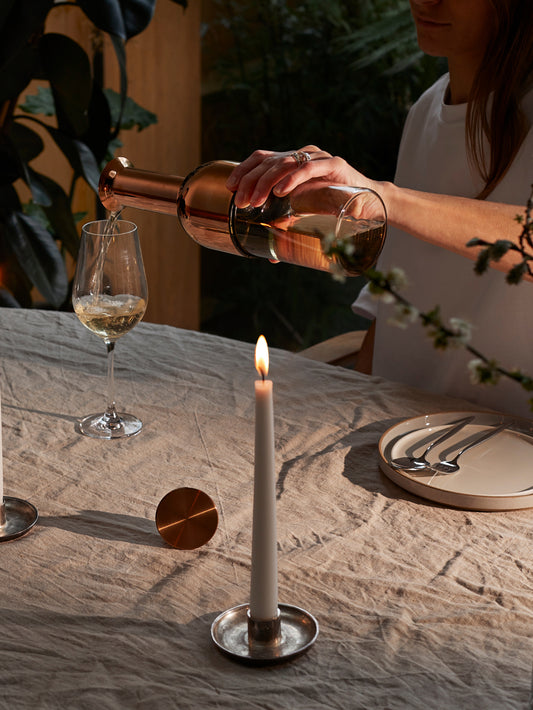
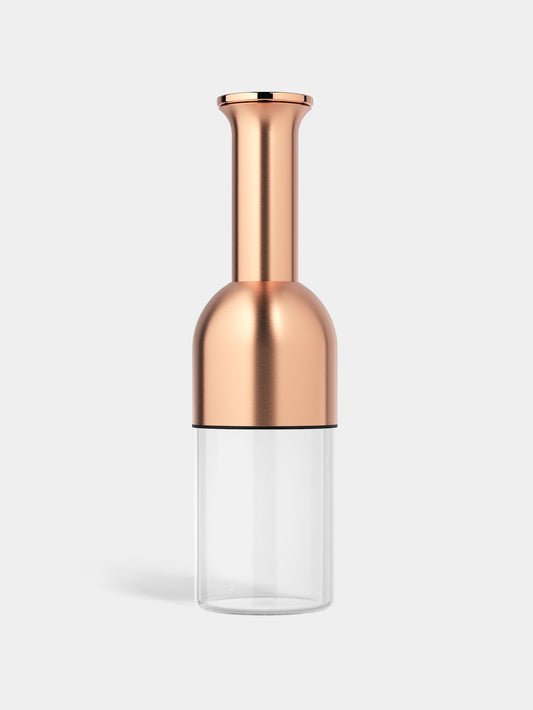
Dina: We talk about the benefits of decanting at ETO, so great to hear it expertly described by a cellar master. Which wine are you enjoying in your Copper satin ETO wine decanter today?
Klaas: Babylonstoren Chardonnay - a dry, full-bodied white matured for 11 months in 300 litre French oak. Bright citrus is softened by hints of vanilla and gentle nuttiness. A generous wine for special occasions.
Dina: ETO & Babylonstoren follow a similar philosophy of innovation, the highest quality, passion, refinement and sustainability. What’s next for Babylonstoren?
Klaas: The focus is on deepening international presence through exceptional wines, while remaining anchored to the land. Innovation will always walk hand in hand with heritage. Discovery will remain central. And the garden will continue to guide the way.